
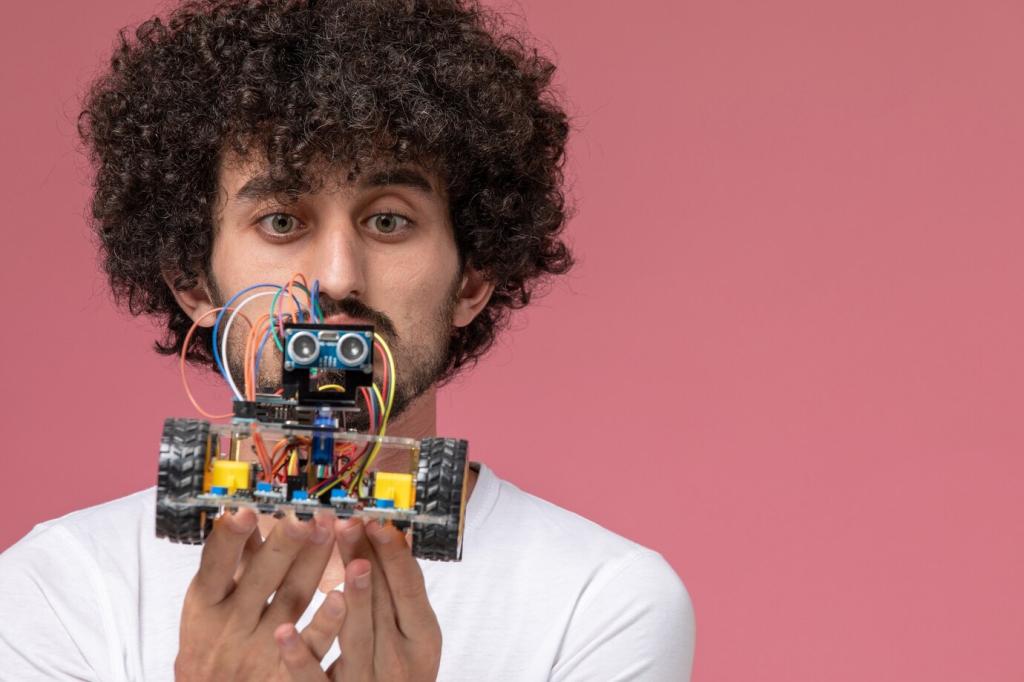
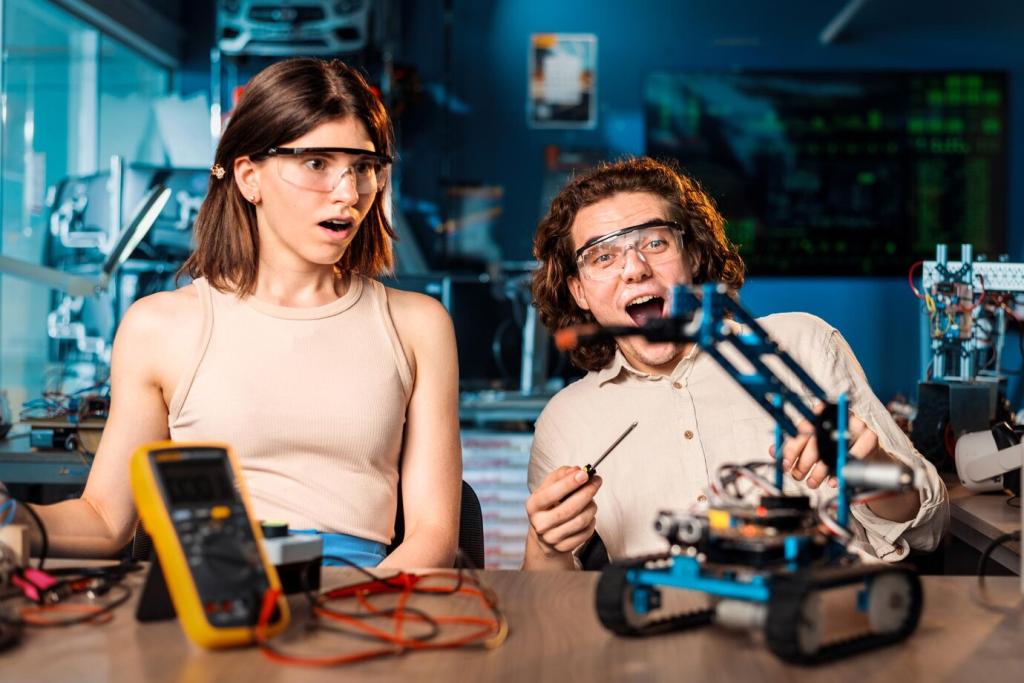
Chosen theme: How Robotics Fosters STEM Learning in Children. Welcome to a playful, hands-on world where gears, sensors, and simple lines of code turn curiosity into confidence. Explore stories, ideas, and strategies you can apply today, and join the conversation by sharing your questions and wins.

Why Robots Make STEM Click

When children build a small robot and watch it move because they assembled a motor correctly, the lesson becomes unforgettable. The physical feedback loop reinforces memory, deepens focus, and invites experimentation, transforming trial-and-error into real understanding and pride.

Why Robots Make STEM Click

A child writes a few lines of block code, presses run, and the robot smoothly pivots left. That instant result teaches cause and effect, debugging, and logical flow. It rewards perseverance with motion, sound, and light that reflect each thoughtful change.

A Simple Path to Classroom Integration

Begin with a simple build. Let students name their robots, personalize decorations, and test movement. Short challenges, like moving ten inches in a straight line, help introduce measurement, wheel circumference, and friction without overwhelming anyone on day one.

A Simple Path to Classroom Integration

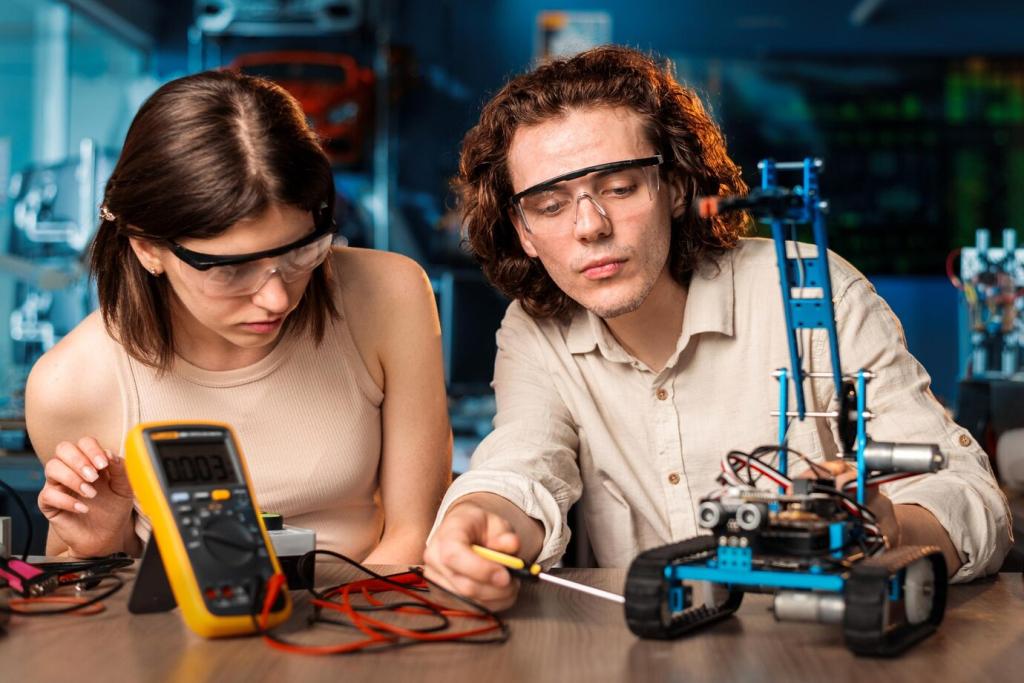
Introduce a distance or color sensor. Have teams program a gentle stop before bumping a wall or follow a colored tape path. Students learn conditionals—if, then, else—while observing sensor noise, reliability, and the importance of repeated testing for consistency.
Maya’s robot kept crashing into cardboard walls until she learned to average multiple sensor readings. Suddenly, the maze became solvable. She proudly explained noise and thresholds to classmates, discovering that teaching others cemented her understanding and built leadership confidence.

Stories from the Workshop Floor

Mathematics that moves

Measure speed with distance over time, translate rotations into inches, and compare predicted versus observed values. Children practice proportional reasoning, estimation, and data analysis, learning that numbers are tools for steering outcomes instead of mysterious marks on worksheets.

Scientific thinking with sensors

Sensors invite hypotheses: How does ambient light affect readings? Why does the distance sensor fluctuate near angled surfaces? Students design fair tests, control variables, graph results, and explain error sources, practicing genuine scientific inquiry rather than memorizing isolated facts.

Engineering design cycle made real

Define the problem, brainstorm, prototype, test, and iterate. Children document choices—gear ratios, sensor placement, code structure—and justify trade-offs within constraints. They learn that elegant solutions emerge from feedback, not from first attempts, and that constraints spark creativity.

Inclusive Robotics for Every Child

Welcoming girls into leadership

Design prompts that highlight empathy, storytelling, and real-world impact, not just speed or strength. Rotate roles—driver, coder, documentarian—so leadership is shared. Invite women mentors to visit, making success visible and attainable for girls considering STEM pathways.

Supporting neurodiverse learners

Predictable routines, visual checklists, and quiet build zones help many students thrive. Provide fidget-friendly parts trays and clear task breakdowns. Celebrate precise thinking and pattern recognition as strengths that make teams more resilient and inventive during complex challenges.

Robotics at Home: Parents’ Guide

Dedicate a small bin for parts, a notebook for ideas, and a clear mat as a ‘testing field.’ Short, daily tinkering sessions—ten minutes is enough—build momentum, reduce frustration, and keep robotics joyful rather than a marathon of complexity.

Robotics at Home: Parents’ Guide

Start with low-cost kits or repurpose materials: cardboard chassis, rubber-band tires, and simple motors. Pair with free programming apps or simulations. Gradually add sensors as interest grows, ensuring each purchase solves a real problem your child wants to tackle.

Robotics at Home: Parents’ Guide

Alternate coding time with unplugged building and planning. Encourage children to sketch ideas, label components, and estimate outcomes before touching the keyboard. This balance fosters intentional design, clearer code, and greater satisfaction when the robot behaves as imagined.
Measuring Progress and Next Steps

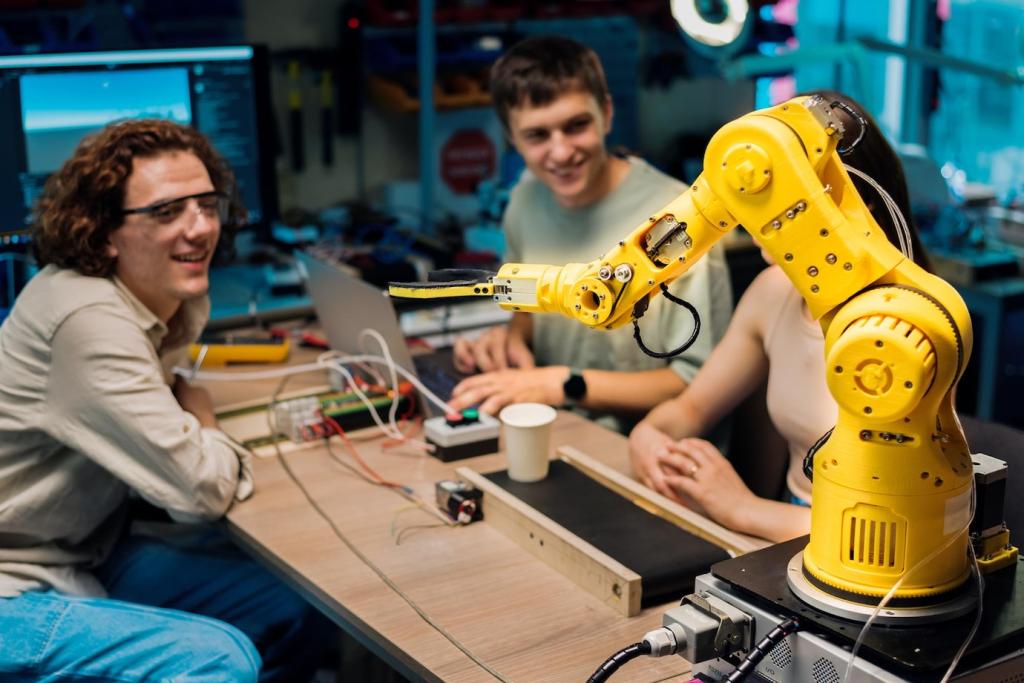
Use rubrics that value problem definition, iteration, collaboration, and explanation—not just a working robot. Quick exit tickets and reflection prompts capture evolving thinking, helping children recognize progress and set goals they genuinely care about pursuing next.

Measuring Progress and Next Steps

Have students collect photos, code snippets, trial videos, and data graphs. Captions explain what changed and why. Portfolios reveal growth across months, boost communication skills, and give families a tangible window into their child’s evolving STEM identity.
Portableplumbingcompany
Privacy Overview

This website uses cookies so that we can provide you with the best user experience possible. Cookie information is stored in your browser and performs functions such as recognising you when you return to our website and helping our team to understand which sections of the website you find most interesting and useful.